
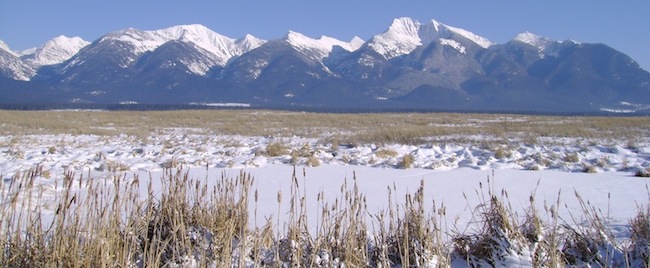
My grandparents house was outside of town, at the foot of the mountains, surrounded by woods. Papa kept his guitar in a black case under his bed, along with his violin. Sometimes, after dinner, if we grandkids begged and pleaded enough, Papa would get his old guitar out and play us a few tunes. They were simple folk songs, sang without any of the southern drawl common in country music. One I remember the most was about his mama sending him to town to buy a chocolate ice cream cone. The little house would spring to life those nights, we would be warm from the fire, and full from Grandma’s cooking, and listen to the simplest, most honest music I have ever heard.
Papa tried to teach me how to play, and I think if I had not been so young and stubborn I would have listened to him. He would tell me where to put my fingers, I would get it wrong, and he would grab my fingers and try to put them where they were supposed to go. It didn’t work out, and so far I have only learned a few basic chords. Right now my guitar sits in the corner of my office, staring blankly at me through it’s black case, waiting for me to bring it to life.
Sometimes a friend will come over who knows how to play, and I’m always amazed at how he can call such beautiful music from the strings of the guitar that I can only coax out a basic tune from. Years ago this friend and few other sailors who shared a place in Virgina would get together to write, play, and even try to sing. For now, learning to play guitar is still on my to-do list, but appreciating honest music has always been close to my heart.
The other day I was helping my daughter do the dishes, and we were taking turns picking songs to listen to while we washed. She would pick out one pop song after another, and as she did I realized that pop music hasn’t changed in at least twenty years. It is still as synthetic and manufactured as ever, pandering to the lowest common denominator. I struggled to find something that we could both enjoy, but almost every song I chose was coldly marked as “weird”.
She has a point, a lot of it is strange. Strange, and a bit raw, unprocessed, analog. I have, so far, 22 albums of the Grateful Dead, most of them live bootlegs from the seventies. There is something about the energy of the live shows, how I can close my eyes and almost be there. Sometimes you can hear the crowd yelling out asking for a song, the Dead hear it and when they start playing you can feel the energy spread through the crowd like wildfire, the beat of the drums matched by clapping hands. There was nothing scripted about these old shows, the Dead would just get up there and start playing.
This is real music, a person and an instrument coming together to create something beautiful. From Papa’s strumming to the Dead’s wall of sound, there runs in my musical preferences a common thread of musicianship, of jamming for the love of the song. I was browsing through the Archive’s library of Grateful Dead shows the other day when I saw mention of a Grateful Dead cover contest. That mention led me to YouTube, where I found one of the best covers of one of my favorite Dead songs:
The Giving Tree Band had me captivated as soon as I heard the violin, but when the steel guitar and the piano started, I was there. It’s not just the song, although it is a fantastic song, and it is not just that they have these instruments, the band appeals to me because it sounds sincere. It is hard (for me at least) to explain the difference in this recording and any other, but I think it has a lot to do with the lack of post processing. I believe I’m hearing the musicians real voice, not a digitized representation of it that’s been leveled and artificially harmonized. I’m hearing the banjo, and the electric guitar as the musicians intend their instruments to be heard.
I love music, even if I would sometimes rather drive in silence. I like to listen to music that relates to me, that’s played by people who might just drop by for a cup of coffee to catch up on old times. Music that makes me feel at home. Music that reminds me of the smell of burning pine, the taste of pumpkin pie fresh on my lips, the sound of Papa’s guitar, and knowing deep in your heart that you are warm, safe, and loved.
